Table of Contents
What is Word Power Made Easy, and why summarise it?
Norman Lewis was a grammarian and lexicographer from the United States who was widely recognized as one of the leading authorities on English language talents. Throughout his life, he published various books on language-related topics, including Roget’s New Pocket Thesaurus in Dictionary Form and 30 Days to a More Powerful Vocabulary.
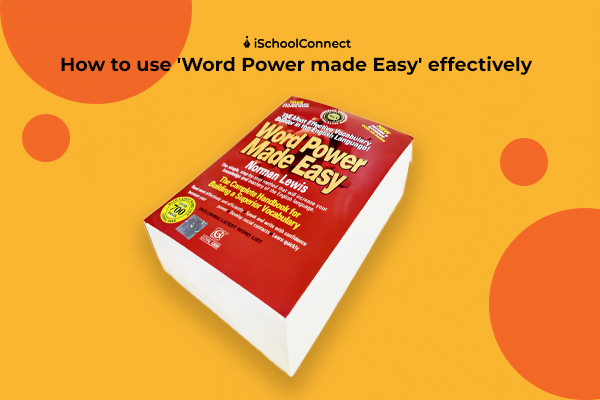
Word Power Made Easy was initially published in 1949 and has been reprinted multiple times. In only the second phrase of the book, Norman Lewis says that the only thing you can do with a book like Word Power Made Easy is to engage with it, to ‘speak aloud to it, talk back to it,’ to ‘use your voice, not just your eyes and mind.’
We want the world to know this is one of those books you will never tire of reading. Like a dictionary, it will undoubtedly be helpful to you at some point. And here’s Word Power Made Easy summary, which is chock-full of valuable quizzes, exams, and progress checks – justice.
Check out: 10 literature books every literature student must read
Word Power Made Easy Summary
Part One: Getting off to a good start
Chapter 1 – How to test your present vocabulary
So, why should you be concerned about your vocabulary?
Lewis immediately responds to this topic by stating that there is enough evidence to favor a close association between vocabulary and achievement. Put that into simple terms: more words are equal to more money.
How many words do you know right now?
There is no need to look any further for an answer to this question. The first chapter of Lewis’ book is essentially a barrage of tests designed to determine whether your existing vocabulary is ‘below average, average, above average, outstanding, or superior in range, verbal speed, and responsiveness.’
Chapter 2 – How to expand your vocabulary?
Do you know what the Sapir-Whorf hypothesis is?
If not, it argues that language impacts your ideas; in other words, a Russian genuinely distinguishes more hues of blue than an American simply because the Russian language has more terms for the subtleties.
So, what does this say about the importance of acquiring new words?
Even if the Sapir-Whorf hypothesis is exaggerated, it is indisputable that expanding your vocabulary can improve your thinking.
Why?
Because words are images of things and the more things you can identify, the better your vision of – and ability to connect with – the world.
Chapter 3 – How to talk about personality types
In chapter three, you’ll discover a variety of phrases “that define all kinds and sorts of individuals, including terminology for self-interest, reactions to the world, attitudes toward others, skill and awkwardness, marital status, and hate of man, woman, and marriage.”
You’ll discover the difference between an egoist and an egotist, what an ”ambivert’ is, and that ‘misogamist’ is a term through notable examples.
Lewis concludes the three sections of this chapter with the joyous realization that you’ve probably already learned more words through them than you would in a single year.
Chapter 4 – How to talk about doctors
Have you ever skimmed through the tedious hospital conversation in every other House episode?
Now is your time to impress your colleagues!
Many terminologies linked to pediatric illnesses and skeletal abnormalities, heart and skin problems, and nerve and mental disorders are covered in Chapter 4.
Chapter 5 – How to talk about various practitioners
This is the chapter where you may expand your vocabulary with terms like “orthodontist,” “optometrist,” “podiatrist,” and “gerontologist.” You’ll also get more familiar with several related terms and become more aware of how words operate.
Chapter 6 – How to talk about various science and scientists
Here, you will learn about some of the most essential knowledge explorers and the names of many different scientific disciplines. Words such as ‘an anthropology,’ ‘geologist,’ ‘an entomologist,’ ‘a semanticist,’ ‘a sociologist,’ and so on. As usual, Lewis includes a section in which he discusses the etymology of these internationalisms and several self-assessment exams.
Chapter 7 – How to discuss lying and liars
Not everyone who lies is the same. Some are skilled liars, while others are born liars; the flagrant liars are a narrative in and of itself, and the fluent liars can twist facts as quickly as they can pronounce their names.
Chapter 8 – How to check Your Progress: Comprehensive test
Each of the book’s three parts concludes with a 120-item comprehensive exam. Don’t miss this!
Part Two: Gaining Increased Momentum
Chapter 9 – How to talk about actions
The second part progresses from nouns to other parts of speech. And the ninth chapter begins with several verbs that “accurately describe important human activities.” Through examples and amusing comments, learn what the terms “disparaging,” “equivocating,” “militating,” and “obviating” mean. Of course, all the related words and their etymologies are back for your enjoyment.
Read more: 5 famous Indian authors and their books that you must read
Chapter 10 – How to discuss different speech habits
This is the chapter to work with if you want to learn what “taciturn” or “garrulous” means and don’t want to sound “inarticulate” and “banal” the next time you’re out with your friends.
Chapter 11: How to insult your adversaries
So this is your opportunity to tell your enemies precisely what you think of them if they are sycophants or ignoramuses, reprobates, or sociopaths.
Chapter 12 -How to flatter your friends
On the plus side, there are numerous words in the dictionary that you can use to flatter your friends. They’re wonderful, to be sure, but some of them are ‘ingenious,’ while others are ‘magnanimous,’ and a third may be ‘perspicacious’ – which is why you’d go to him or her for help with your problems!
Chapter 13 – Checking your progress: Comprehensive Test II
Part II requires another 120-item self-assessment test.
Part Three: finishing with a feeling of complete success
Chapter 14 – How to talk about common phenomena and occurrences
As Robert Louis Stevenson once said, the world is a whole of many things, and it’s wonderful to be able to name at least some of them. This chapter introduces the terms ‘ephemerality’ and ‘cacophony,’ ‘parsimonious,’ and ‘opulent.’
Chapter 15 – How to talk about what goes on.
When you’re completely exhausted and frustrated, you’re said to be ‘enervated.’ Other times, when you can’t decide and keep changing your mind, you’re probably ‘vacillating.’ Learn more about the resemblance here.
Chapter 16 – How to Talk about a Variety of Personal Characteristics.
This chapter will teach you some “adjectives that describe genuine humility, dissatisfaction, snobbery, female courtesy, financial embarrassment, sadness, and so on.” So look here to learn the definitions of words like ‘impecunious,’ ‘obstreperous,’ and ‘innocuous.’
Chapter 17 – How to check your progress: Comprehensive Test III
By now, we don’t need to tell you what you’ll find in this chapter, do we?
Chapter 18 – How to check your standing as an amateur etymologist
Most of the chapters in Lewis’ book begin with teaser questions; this chapter answers them.
Read more: Dan Brown Books | 5 books for every possible bibliophile
Some Notable Quotes from Word Power Made Easy
- Words are the instruments that men and women employ to grasp the thoughts of others and with which they do much of their thinking. They are the tools of thought.
- No matter your age, you can learn efficiently or start learning once again if you have stopped.
- Successful people have superior vocabularies.
- If a student has a superior vocabulary, it will probably follow that he will do better work academically.
- Educational research has discovered that your I.Q. is intimately related to your vocabulary.
Read more: Top 5 Amartya Sen books
How to read Word Power Made Easy?
This is a one-of-a-kind question. Reading from the first page of a book is the approach that everyone takes when reading a book. However, this book isn’t just for reading! One must take the proper approach. Instead of flipping through the first few pages that tell you “how to pronounce,” “use of schwa,” and “test your vocabulary,” JUMP to Chapter 1 of Unit 1. These first few pages are pretty gloomy.
After finishing Unit 1, go over it again the next day. All of the words will stick with you. You could also keep a notebook to help you remember the words. A few units are following. You can even deduce the meaning of words you’ve never heard of. You are not required to learn words; however, a dictionary will be helpful. It will teach you how to deduce the meaning of unfamiliar words.
How long should it take to finish Word Power Made Easy with regular study?
Reading it for the first time takes about 90 hours. You can divide the hours according to your available time. A second time would take between 50 and 60 hours. You would have remembered most of the words and completed most exercises.
The third time, you would only take around 30 hours. You’ll be skimming the book this time, and only unremembered words will take your major attention.
Apart from those, develop a habit of reading. It may be books, newspapers, magazines, etc. Only solving the exercises in Word Power Made Easy won’t help. Reading a lot will help you understand the usage of new words.
Also, I do not think Word Power Made Easy is a one-time read. You should revisit the book every few months or even years.
Keep reading: 7 Chetan Bhagat books you must read
Word Power Made Easy – Word List
- Pedestrian – a person who travels by foot
- Adroit – quick or skillful or adept in action or thought
- Admonish – scold or reprimand; take to task
- Ascetic – someone who practices self-denial as a spiritual discipline
- Corrigible – capable of being corrected or set right
- Debacle – a sudden and complete disaster
- Diaphanous – so thin as to transmit light
- Epitome – a standard or typical example
- Equanimity – steadiness of mind under stress
- Gauche – lacking social poise or refinement
- Iconoclastic – characterized by an attack on established beliefs
- Indefatigable – showing sustained enthusiasm with unflagging vitality
- Ingenuous – lacking in sophistication or worldliness
- Lubricious – characterized by lust
- Militate – have force or influence; bring about an effect or change
- Misogynist – a misanthrope who dislikes women in particular
- Nadir – the lowest point of anything
- Apogee – the farthest point in an orbit around the Earth
- Perigee – the nearest point in an orbit around the Earth
- Zenith – the highest point of something
- Obloquy – state of disgrace resulting from public abuse
- Proscribe – command against
- Punctilious – marked by precise accordance with details
- Tyro – someone new to a field or activity
- Virago – a noisy or scolding or domineering woman
- Volubility – the quality of being facile in speech and writing
- Incendiary – capable of causing fires or catching fire spontaneously
- Dire – fraught with extreme danger; nearly hopeless
- Abject – showing utter resignation or hopelessness
- Stolidity – apathy demonstrated by an absence of emotional reactions
- Asylum – a shelter from danger or hardship
- Arid – lacking sufficient water or rainfall
- Vermin – any of various small animals or insects that are pests
- Rodent – relatively small placental mammals
- Penury – a state of extreme poverty or destitution
- Modicum – a small or moderate or token amount
- Vicarious – experienced secondhand
- Ephemeral – anything short-lived, as an insect that lives only for a day
- Euphemism – an inoffensive expression substituted for an offensive one
- Badinage – frivolous banter
- Phlegmatic – showing little emotion
- Bovine – any of various wild or domestic cattle
- Nausea – disgust so strong it makes you feel sick
- Nostalgic – unhappy about being away and longing for familiar things
- Cacophonous – having an unpleasant sound
- Carnivorous – relating to flesh-eating animals
- Clandestine – conducted with or marked by hidden aims or methods
- Highly strung – in an agitated state
- Poverty-stricken – poor enough to need help from others
- Niggardly – petty or reluctant in giving or spending
- Penurious – excessively unwilling to spend
- Parsimonious – excessively unwilling to spend
- Indigence – a state of extreme poverty or destitution
- Destitution – a state without money or prospects
- Subsistence – a means of surviving
- Affluent – having an abundant supply of money or possessions of value
- Opulence – wealth as evidenced by sumptuous living
- Fluid – continuous amorphous matter that tends to flow
- Influence – a power to affect persons or events
- Confluence – a place where things merge or flow together
- Fluent – expressing yourself readily, clearly, and effectively
- Expand – use up or consume fully
- Fatigue – temporary loss of strength and energy from hard work
- Evanescent – short-lived; tending to vanish or disappear
- Adolescent – a person who is older than 12 but younger than 20
- Convalesce – get over an illness or shock
- Putrescent – in a state of decay or decomposition
- Putrid – of or relating to the process of decay
- Obsolescent – becoming disused or outdated
- Euphony – any pleasing and harmonious sounds
- Euphonic – of or relating to or characterized by euphony
- Euphonious – having a pleasant sound
- Eulogy – a formal expression of praise for someone who has died
- Philology – the humanistic study of language and literature
- Monologue – a dramatic speech by a single actor
- Dialogue – a conversation between two persons
- Epilogue – a short speech by an actor at the end of a play
- Prologue – an introductory section of a novel or other literary work
- Euphoria – a feeling of great elation
- Euthanasia – the act of killing someone painlessly
- Persiflage – light teasing
- Cliche – a trite or obvious remark
- Bromide – a trite or obvious remark
- Platitude – a trite or obvious remark
- Anodyne – capable of relieving pain
- Platitudinous – dull and tiresome but with pretensions of significance or originality
- Phlegmatic – showing little emotion
- Leonine – of or characteristic of or resembling a lion
- Canine – a dog, wolf, jackal, or other closely related mammal
- Feline – of or relating to cats
- Porcine – relating to pigs or swine
- Vulpine – resembling or characteristic of a fox
- Ursine – of or relating to or similar to bears
- Lupine – of or relating to or characteristic of wolves
- Equine – relating to or resembling a horse
- Piscine – of or relating to fish
- Nostalgia – a longing for something past
- Grating – unpleasantly harsh in sound
- Herbivorous – feeding only on plants
- Omnivorous – feeding on both plants and animals
Discover: Best books by Rabindranath Tagore
Key Takeaways
- Word Power Made Easy by Norman Lewis offers an alternative method for learning new words.
- It is also a better way to learn them because the book correctly assumes that words can only be absorbed appropriately when placed in a specific context, which is how most of them are introduced.
- In this book, there are sections dedicated to rules and applied grammar. The author has presented simple techniques for improving vocabulary and word skills.
- This book has helped and improved the language of generations of students. This is a fundamental book about the English language and proper word usage.
Was this blog informative? If so, please let us know by sharing your thoughts in the comments below. Click here to contact us for more information on the book ‘Word Power Made Easy.
Like this blog? read next: 50 daily use English words with meanings
FAQs
Ques 1: Is Word Power Made Easy book beneficial to students?
Answer 1: Anyone looking to expand their vocabulary will find it extremely useful. Word Power Made Easy, written by bestselling grammarian Norman Lewis, is a handy reference for students looking to improve their English speaking, reading, and writing skills.
Ques 2: How many new words are in Word Power Made Easy?
Answer 2: Surprisingly, it is pretty engaging, to the point where you do not feel bored or pressed. By the end of the book, you’ll have learned 400-450 new words and the desire to use them in sentences and brag about them.
Ques 3: How many sessions are in the Word Power Made Easy book?
Answer 3: Power Made Easy is an excellent book. If you try it, you’ll notice that it has many sessions, each lasting half an hour, which aids in gradually developing your vocabulary. It comprises about 70 sessions, and by the time you get to the last page, you will be a word master if you enjoyed working with it.

People also liked
 Academics
 What is GPA? How to Calculate GPA & its Importance
Last Updated on October 16, 2024 4160 Views Academics
 Engineering in New Zealand | A perfect study destination!
Last Updated on March 10, 2025 2424 Views Academics
 Top study destinations for various engineering branches
Last Updated on November 2, 2023 8387 Views Academics
 Clarkson University | Top 10 undergraduate programs
Last Updated on June 27, 2025 3691 Views Academics
 An essential guide to the grading system in the USA
Last Updated on September 13, 2023 4887 Views Academics
  9 secrets you should know about Studying Abroad!